
What Is Freelancing? A Complete Beginner’s Guide.
Freelancing has become one of the most popular ways to build an online career in recent years. With the growth of the internet, remote work, and digital platforms, people no longer need to rely only on traditional office jobs to earn a living. Freelancing allows individuals to work independently, use their skills, and earn money by completing projects for clients from anywhere in the world.
This complete beginner’s guide is written for those who want a clear and realistic understanding of freelancing. In this article, you will learn what freelancing is, how it works, its advantages and disadvantages, how much you can earn, and whether freelancing is the right career path for you.
What Is Freelancing?
Freelancing is a type of self-employment where a person offers services to clients on a project or contract basis instead of working as a permanent employee for a single company. Freelancers are independent workers who choose their clients, projects, and working hours.
Unlike traditional jobs, freelancers are not required to work from an office or follow fixed schedules. As long as they deliver quality work on time, they have the freedom to work from home, cafés, or any location with a stable internet connection.
Freelancing is common in industries such as writing, graphic design, web development, digital marketing, video editing, and virtual assistance.

How Does Freelancing Work?
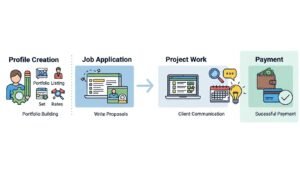
Freelancing usually works through online marketplaces or direct client communication. A freelancer creates a profile highlighting skills, experience, and services. Clients post job requirements, and freelancers apply by sending proposals.
Once a client selects a freelancer, both parties agree on project scope, deadline, and payment terms. The freelancer completes the work and submits it for review. After approval, payment is released.
Most freelancing platforms provide secure payment systems to protect both freelancers and clients, especially beginners.
Popular Freelancing Job Categories
There are many freelancing job categories available online. Some of the most popular include:
- Content writing and copywriting
- Graphic design and branding
- Web design and web development
- Digital marketing and SEO
- Video editing and animation
- Data entry and virtual assistance
Each category requires different skills and tools. Beginners should choose one category and focus on improving that skill instead of trying multiple fields at once.

Benefits of Freelancing
One of the biggest advantages of freelancing is flexibility. Freelancers can decide when and where they work. This flexibility allows people to balance personal life, studies, or other responsibilities.
Another benefit is global opportunity. Freelancers can work with international clients and gain experience across different industries. Over time, skilled freelancers can increase their rates and build long-term client relationships.
Freelancing also encourages continuous learning, as freelancers must regularly update their skills to stay competitive.
Challenges of Freelancing
Despite its benefits, freelancing also comes with challenges. One of the most common challenges is income instability, especially during the early stages. Freelancers do not receive a fixed monthly salary.
Competition is another challenge. Many freelancers apply for the same jobs, so beginners must focus on quality work and clear communication to stand out. Freelancing also requires self-discipline, time management, and consistency.
Is Freelancing Suitable for Beginners?
Freelancing is suitable for beginners who are willing to learn and stay patient. Many successful freelancers started with little or no experience and gradually built their careers through practice.
Beginners should focus on learning skills, creating strong profiles, and completing small projects first. Freelancing is a long-term career path, not a quick money solution.
How Much Can You Earn from Freelancing?
Freelancing income depends on skills, experience, niche, and effort. Some freelancers earn small amounts initially, while others grow their income significantly over time.
There is no guaranteed income in freelancing. Success depends on skill quality, professionalism, and consistency. Freelancing should be approached as a skill-based profession rather than an instant earning method.
Freelancing vs Traditional Job
Freelancing offers freedom and independence, while traditional jobs provide stability and fixed income. Freelancers control their workload, whereas employees follow company rules and schedules.
Some people prefer freelancing full-time, while others do it part-time alongside a job. The best option depends on personal goals, lifestyle, and risk tolerance.
Final Thoughts
Freelancing is a powerful career option in the modern digital world. It allows individuals to work independently, earn online, and build valuable skills. However, freelancing requires patience, learning, and dedication.
If you are serious about building an online career, freelancing can be a rewarding path. Start small, stay consistent, and focus on delivering quality work.