Top 5 Emerging IT Trends That Will Define 2026 and Beyond
In the technology sector, standing still is equivalent to moving backward. As we settle into 2026, the pace of innovation has shifted from “fast” to “exponential.”
Just a few years ago, Generative AI was a novelty experiment. Today, it is rewriting the code for entire industries. Similarly, cybersecurity has evolved from a simple antivirus installation to a complex war against AI-driven threats. For IT professionals and business leaders, keeping up with these changes is no longer just about competitive advantage—it is about survival.
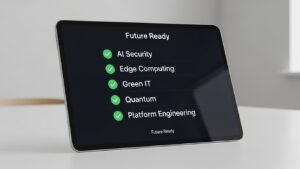
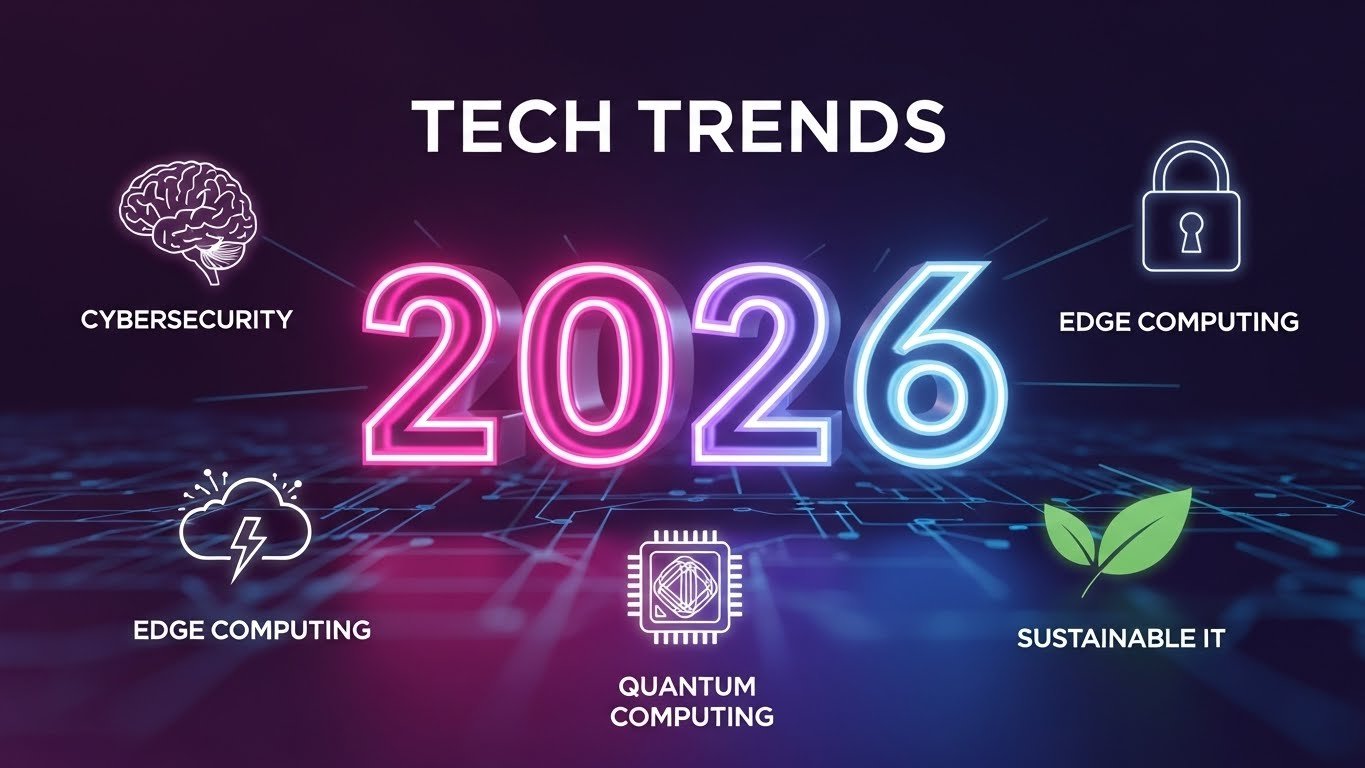
We have analyzed the market shifts, hardware breakthroughs, and software developments to bring you the definitive list of what matters right now. Here are the top 5 emerging IT trends that will define the landscape in 2026.
1. AI-Driven Cybersecurity (The Battle of Bots)
In 2026, human hackers are no longer your most significant threat. AI agents are. Cybercriminals are now using Artificial Intelligence to write polymorphic malware that changes its code every time it is detected, rendering traditional antivirus signatures useless.
However, the defense is also evolving.
The Trend: The rise of Autonomous Security Operations Centers (SOCs). Companies are deploying AI defenders that can detect, analyze, and neutralize threats in milliseconds, without human intervention.
- Self-Healing Networks: If a vulnerability is found, the AI patches it instantly.
- Predictive Analysis: Instead of waiting for an attack, AI predicts where the next attack will come from based on global data patterns.
If your security strategy does not involve AI, you are bringing a knife to a nuclear gunfight.
2. Edge Computing Overtakes the Cloud
For the last decade, the mantra has been “Move everything to the Cloud.” In 2026, the pendulum is swinging back—sort of. We are moving to the Edge.
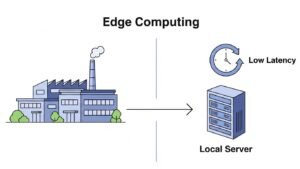
With the explosion of IoT (Internet of Things) devices—from smart factories to autonomous vehicles—sending terabytes of data to a central cloud server is becoming too slow and too expensive. The latency (lag) is unacceptable for a self-driving car that needs to brake in milliseconds.
The Trend: Processing data locally on the device or a nearby server (the “Edge”) rather than sending it to a data center halfway across the world.
- Benefit: Zero latency and reduced bandwidth costs.
- Impact: IT teams will need to manage thousands of mini-servers rather than just a few massive cloud instances.
3. Sustainable IT (Green Tech) Becomes Mandatory
Sustainability is no longer a PR buzzword; it is a regulatory requirement. In 2026, governments across Europe and Asia are enforcing strict carbon caps on data centers.
The Trend: Green IT.
This involves optimizing code to require less processing power, using hardware made from recycled materials, and designing data centers that run on 100% renewable energy.
This involves optimizing code to require less processing power, using hardware made from recycled materials, and designing data centers that run on 100% renewable energy.
- Carbon-Aware Computing: Software that runs heavy workloads only when the energy grid is using renewable sources (like solar or wind) and pauses when the grid is dirty (coal).
- Circular Economy: IT departments are now required to repair and repurpose laptops and servers rather than shredding them after three years.
4. Quantum Computing enters the “Utility Phase.”
For years, Quantum Computing was theoretical physics. In 2026, we are entering the early stages of commercial utility. While we don’t have quantum laptops yet, enterprises are now renting quantum processing power via the cloud to solve problems that traditional supercomputers cannot.
The Trend: Quantum-as-a-Service (QaaS).
Companies in logistics, pharmaceuticals, and finance are using hybrid models (classic computers + quantum processors) to:
Companies in logistics, pharmaceuticals, and finance are using hybrid models (classic computers + quantum processors) to:
- Discover new drugs in days instead of years.
- Optimize global supply chain routes instantly.
- Break traditional encryption methods (which are driving the rush for “Post-Quantum Cryptography”).

5. Platform Engineering (The Death of DevOps?)
“DevOps” (Development + Operations) has been the gold standard for software development. But in 2026, it is evolving into Platform Engineering.
The problem with DevOps was that it forced developers to be experts in cloud infrastructure, Kubernetes, and networking. It was too much cognitive load.
The Trend: Building Internal Developer Platforms (IDPs).
Platform Engineering teams build a “self-service” platform for their developers.
Platform Engineering teams build a “self-service” platform for their developers.
- Think of it like this: DevOps was asking a chef to build the kitchen as well. Platform Engineering is building a fully stocked, state-of-the-art kitchen so the chef can focus on cooking (coding).
- Result: Faster software release cycles and happier developers who don’t have to manage complex infrastructure.
Conclusion: Adapt or Obsolete
The recurring theme of the emerging IT trends in 2026 is efficiency.
- AI makes security more efficient.
- Edge computing improves data transfer efficiency.
- Green IT makes energy usage more efficient.
- Platform engineering makes development more efficient.
For IT professionals, the message is clear: specialized knowledge is valuable, but adaptability is priceless. The tools you used five years ago are likely obsolete. The tools you learn today will define your career for the next decade.