

Freelancing vs Full-Time Job: Which Is Better?
Choosing between freelancing and a full-time job is one of the most critical career decisions many people face today. With the rise of remote work and online platforms, freelancing has become a realistic alternative to traditional jobs. At the same time, full-time jobs continue to offer stability and structure that many people value.
This article provides a clear, unbiased comparison of freelancing vs. full-time jobs. By the end of this guide, you will understand the key differences, advantages, disadvantages, and which option is better suited to your lifestyle, personality, and long-term goals.
What Is Freelancing?
Freelancing is a form of self-employment in which individuals offer services to clients on a project- or contract-based basis. Freelancers are independent workers who are not tied to a single employer. They choose their clients, projects, and working hours.
Freelancers typically work online in fields such as writing, graphic design, web development, digital marketing, video editing, and virtual assistance. Freelancing offers flexibility and independence but also requires self-discipline and consistency.

What Is a Full-Time Job?
A full-time job involves working for a single employer under a long-term contract. Employees usually work fixed hours and receive a regular salary, benefits, and job security.
Full-time jobs are typical in offices, factories, institutions, and companies across various industries. Employees follow company policies, schedules, and reporting structures.

Income Stability – Freelancing vs. a Job
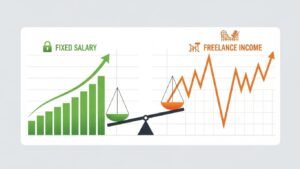
One of the most significant differences between freelancing and a full-time job is income stability. Full-time jobs offer a fixed monthly income, making financial planning easier.
Freelancing income can fluctuate, especially in the beginning. Some months may be very productive, while others may be slow. Over time, experienced freelancers can build a stable income, but it requires effort and planning.
Work Flexibility and Schedule
Freelancing offers high flexibility. Freelancers can choose when and where they work. This is ideal for people who value freedom, travel, or work-life balance.
Full-time jobs usually have fixed schedules and locations. While some companies offer remote work, employees still follow set working hours and deadlines.

Skill Growth and Learning Opportunities
Freelancers must continuously learn new skills to stay competitive. This constant learning helps freelancers grow faster and adapt to market changes.
In full-time jobs, learning opportunities depend on the company. Some companies offer training and career growth, while others may limit skill development to a specific role.

Job Security and Benefits
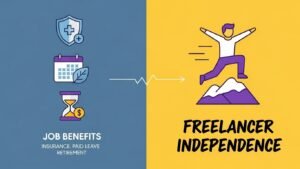
Full-time jobs offer benefits such as paid leave, health insurance, and retirement plans. Job security is one of the main reasons people prefer traditional employment.
Freelancers do not receive employee benefits. They are responsible for managing their own savings, insurance, and time off. However, freelancers gain independence in return.
Work Pressure and Responsibility
Freelancers handle everything themselves, including finding clients, managing projects, and handling payments. This responsibility can be stressful for some people.
Employees usually have defined roles and responsibilities. While work pressure exists, employees are not responsible for finding work or managing business operations.

Career Growth Potential
Freelancing offers unlimited growth potential. Freelancers can increase rates, choose better clients, and scale their services over time.
Career growth in full-time jobs depends on promotions, company policies, and management decisions. Growth can be stable but sometimes slow.

Work-Life Balance
Freelancers can create their own work-life balance, but poor time management can lead to overwork.
Full-time jobs offer more precise boundaries between work and personal life, but fixed schedules can reduce flexibility.
Both paths require conscious effort to maintain balance.

Who Should Choose Freelancing?
Freelancing is suitable for people who:
- Value flexibility and independence
- Are self-motivated and disciplined
- Enjoy learning new skills
- Can handle uncertainty
Freelancing works best for those willing to treat it as a long-term career.

Who Should Choose a Full-Time Job?
A full-time job is suitable for people who:
- Prefer income stability
- Value structured work environments
- Want employee benefits
- Prefer predictable schedules
Traditional jobs offer security and routine.

Can You Do Both Freelancing and a Job?
Many people choose a hybrid approach by freelancing alongside a full-time job. This allows them to gain experience and extra income without giving up job security.
Starting freelancing part-time is a safe option for beginners.

Final Thoughts
Freelancing and full-time jobs both have advantages and disadvantages. There is no universal answer to which is better—it depends on your goals, lifestyle, and personality.
Freelancing offers freedom and growth, while full-time jobs provide stability and security. Some people succeed in one path, while others combine both.
Choose the career path that aligns with your long-term vision and personal priorities.