

Common Freelancing Mistakes Beginners Make
Freelancing is an exciting career option, but many beginners fail not because freelancing does not work, but because they make avoidable mistakes. When starting, it is normal to feel confused, impatient, or overwhelmed. However, repeating common freelancing mistakes can slow down growth and sometimes cause beginners to quit too early.
This article is written to help new freelancers understand the most common freelancing mistakes beginners make and how to avoid them. If you are starting your freelancing journey, learning from these mistakes can save you time, effort, and frustration.
Expecting Quick Money from Freelancing
One of the biggest mistakes beginners make is expecting fast income. Many people start freelancing after watching success stories and assume they will earn money within days or weeks.
Freelancing is a skill-based career that takes time to develop. Beginners usually spend the first few months learning skills, improving profiles, and applying for jobs. Expecting instant income often leads to disappointment and quitting early.

Starting Freelancing Without Learning a Skill
Some beginners jump into freelancing platforms without properly learning any skills. They create profiles, apply for jobs, and then struggle to deliver quality work.
Clients hire freelancers to solve problems. Without strong skills, it becomes difficult to compete and maintain good reviews. Learning a skill first builds confidence and increases long-term success.

Trying to Learn Too Many Skills at Once
Another common mistake is trying to learn multiple freelancing skills at once. Beginners often think that learning more skills will increase their chances of success.
In reality, this approach causes confusion and slow progress. Focusing on one skill allows you to improve faster and build expertise that clients trust.

Copy-Pasting Profiles and Proposals
Many beginners copy profiles, gig descriptions, or proposals from other freelancers. This is a grave mistake. Clients can easily recognize copied content, and platforms may penalize such behavior.
Unique profiles and personalized proposals perform better. Writing in your own words builds trust and shows professionalism.

Underpricing Services Too Much
Beginners often underprice their services to get clients quickly. While competitive pricing is essential, extremely low prices can attract low-quality clients and reduce motivation.
Underpricing also makes it difficult to increase rates later. Beginners should set fair prices based on their skill level and gradually increase them as they gain experience.

Poor Communication with Clients
Communication plays a significant role in the success of freelancing. Some beginners fail to respond on time, misunderstand instructions, or communicate unprofessionally.
Clear and polite communication builds trust and reduces misunderstandings. Always ask questions if requirements are unclear and keep clients updated on progress.

Ignoring Platform Rules and Policies
Each freelancing platform has its own rules and policies. Beginners sometimes ignore these rules, such as working outside the platform or sharing personal contact details too early.
Ignoring platform policies can lead to account warnings or bans. Following these rules protects your account and ensures long-term stability in your freelancing.

Not Building a Portfolio
Many beginners wait to take on paid projects until they have a portfolio. This is a mistake. A portfolio shows what you can do and builds trust with clients.
You can create sample projects, practice work, or mock designs to showcase your skills. A simple portfolio can significantly increase job opportunities.

Giving Up Too Early
Freelancing requires patience. Many beginners give up after facing rejection or slow progress. This is one of the biggest reasons freelancers fail.
Rejections are part of the learning process. Every proposal, mistake, and feedback helps you improve. Consistency is key to freelancing success.

Not Improving Skills Continuously
Freelancing markets change over time. Beginners who stop learning and improving their skills fall behind.
Successful freelancers continuously learn new tools, techniques, and trends. Skill improvement keeps you competitive and increases earning potential.
How to Avoid These Freelancing Mistakes
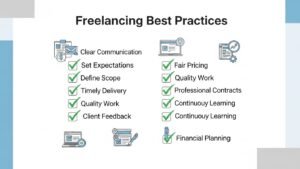
To avoid common freelancing mistakes:
- Learn one skill properly before starting
- Be patient and realistic about income
- Write unique profiles and proposals
- Communicate clearly with clients
- Follow platform rules
- Keep learning and improving
Avoiding these mistakes helps build a strong foundation for a successful freelancing career.
Final Thoughts
Mistakes are part of every learning journey, including freelancing. However, understanding common freelancing mistakes in advance can help beginners avoid unnecessary problems.
Freelancing success comes from patience, consistency, and continuous learning. Focus on long-term growth instead of quick results, and freelancing can become a rewarding and sustainable career.